
addactis® Capital Modeling
Run Solvency II on a standard you can see into, adapt and trust
- Standard Formula, ORSA
- QRT fed automatically
- 50+ insurers already compliant with Addactis
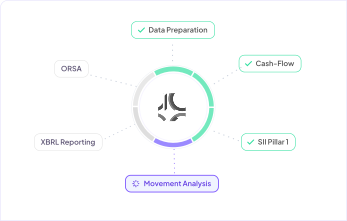
Built and maintained by Addactis experts, the standard is delivered in SaaS, ready to run. Your risk, finance and actuarial teams run, review and validate it step by step, and it can reuse the liability models you already have, including your Python scripts.



A Solvency II standard you don’t have to build, or accept as a black box
Insurers often face a choice: build and maintain their own Solvency II models, or adopt a packaged tool they cannot see into.
addactis® Capital Modeling offers a third way: a ready-to-run standard with documented methodologies and formulas your teams can inspect and adapt, even to challenge the standard formula, and the option to plug in the liability models they already use, through their cash flows and parameters or their Python scripts.
Ready to run
Automate data collection and SCR/MCR calculations to compress your closing cycle by up to 40%, freeing actuaries for analysis instead of data wrangling.
Open to your models
Use the cash flows generated by the solution, or import those of your existing liability models, central and shocked. Your Python scripts can also run as a step of the same chain.
Under your control
Your teams run the standard and validate each step, and every part of it can be adapted when you need to challenge it. Every run is traced and reproducible.
Solo and group
Consolidate entities modeled in the solution or in third-party software, with group risk margin, deferred taxes, group QRT and group ORSA in the same chain.


Why insurers switch to addactis® Capital Modeling
What Capital Modeling actually changes for your team
- Cut manual reconciliation work with automated data quality checks at source
- Build in-house autonomy on recurring Solvency II production, with Addactis experts available when you need them
- Adapt the standard to your specifics, from your own cash flows and parameters to your Python scripts, without changing tools
Built for every stage of your regulatory process
Reliable data before the first calculation
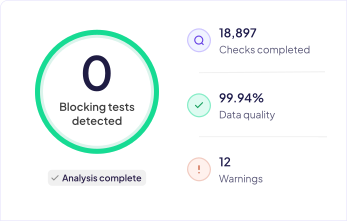
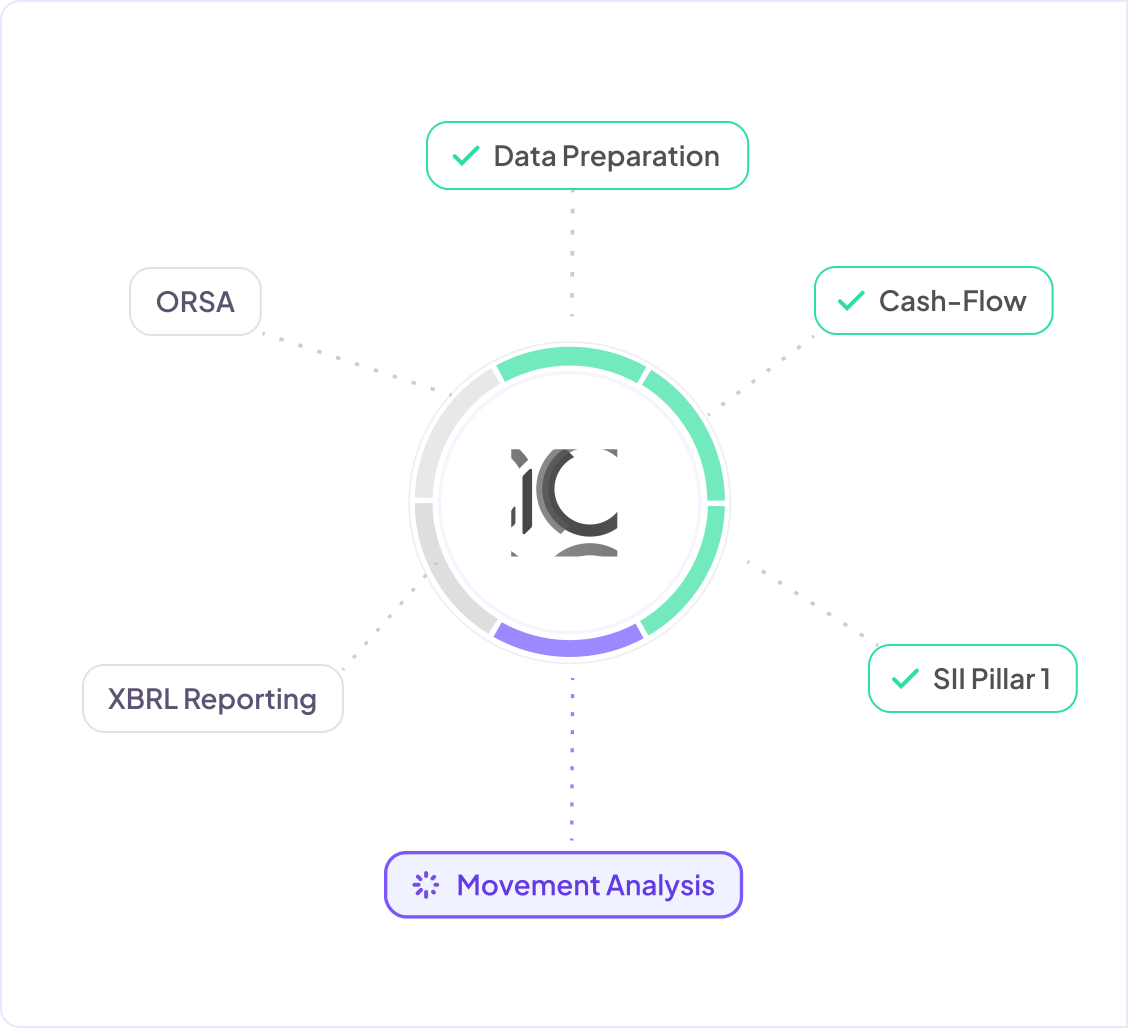
Each team loads its own inputs: accounting, tax, finance, risk, technical. Quality and consistency checks run at source, so anomalies are caught where they occur, not at the end of the chain.
- Separate input steps by source, with step-level permissions
- Built-in quality and consistency checks, including asset/accounting and liability/accounting reconciliation
- Load your files by drag and drop or SFTP, or feed them directly from your systems through our public API
- QRT fed automatically for your regulatory reporting, XBRL included
Your ORSA starts from your closing, not from scratch
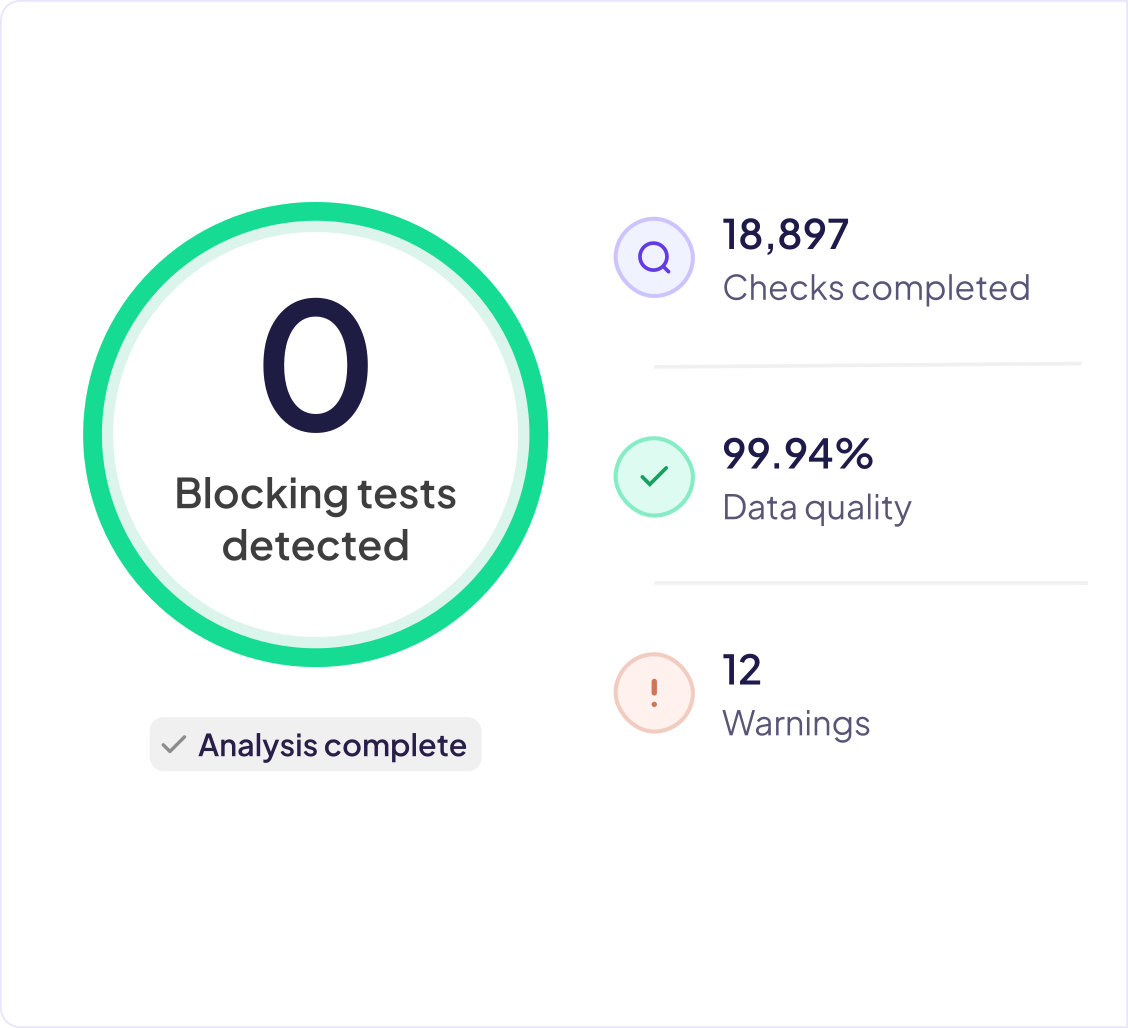
Import your validated Pillar I project, update only what changes, and recalculate the full standard formula over your business plan horizon, across a central scenario and stressed scenarios.
- Reuse your Pillar I closing as the ORSA starting point
- Project balance sheet and P&L in prudential and French GAAP views
- Compare central and stressed scenarios side by side
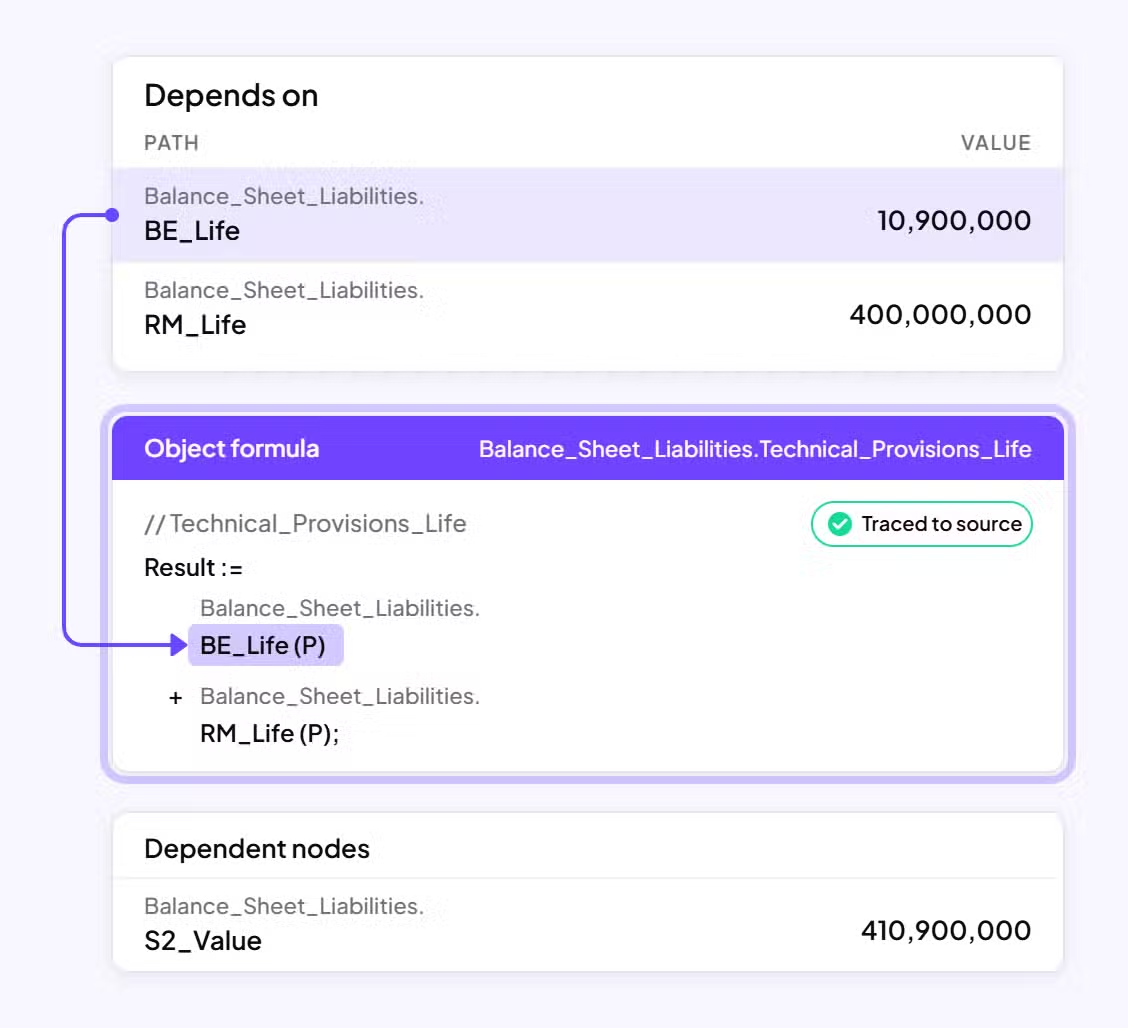
Every figure traceable, every step validated
Built on addactis® Platform, the solution separates design from execution. Your teams run the standard under step-level permissions, and the right person validates each step before it feeds the next. A regulatory report is only as strong as the trail behind it: every figure can be traced back to its source data and assumptions.
- Validation at input, step and project level, with dedicated validator roles
- Give your auditors a documented calculation trail: every run keeps its inputs, outputs and model version, and validated runs are locked
- Compare each step with your previous closing
- Export your results to Excel with our add-in, to keep the reports your teams already know

Test your solvency position without rebuilding your models
Capital Modeling covers the calculations an actuarial team relies on, from transitional measures and LAC DT to CAT risk and several Risk Margin methods. Because sensitivities run on your validated closing, testing a market shock or a management option no longer means a dedicated project.
- Revalue your portfolio under rate, equity, spread, property and inflation sensitivities
- Test asset allocation and reinsurance strategies on your solvency ratio
- Compare Risk Margin methods side by side before choosing the one that goes into your balance sheet
- Drill down from your SCR to each sub-risk, with formulas you can inspect
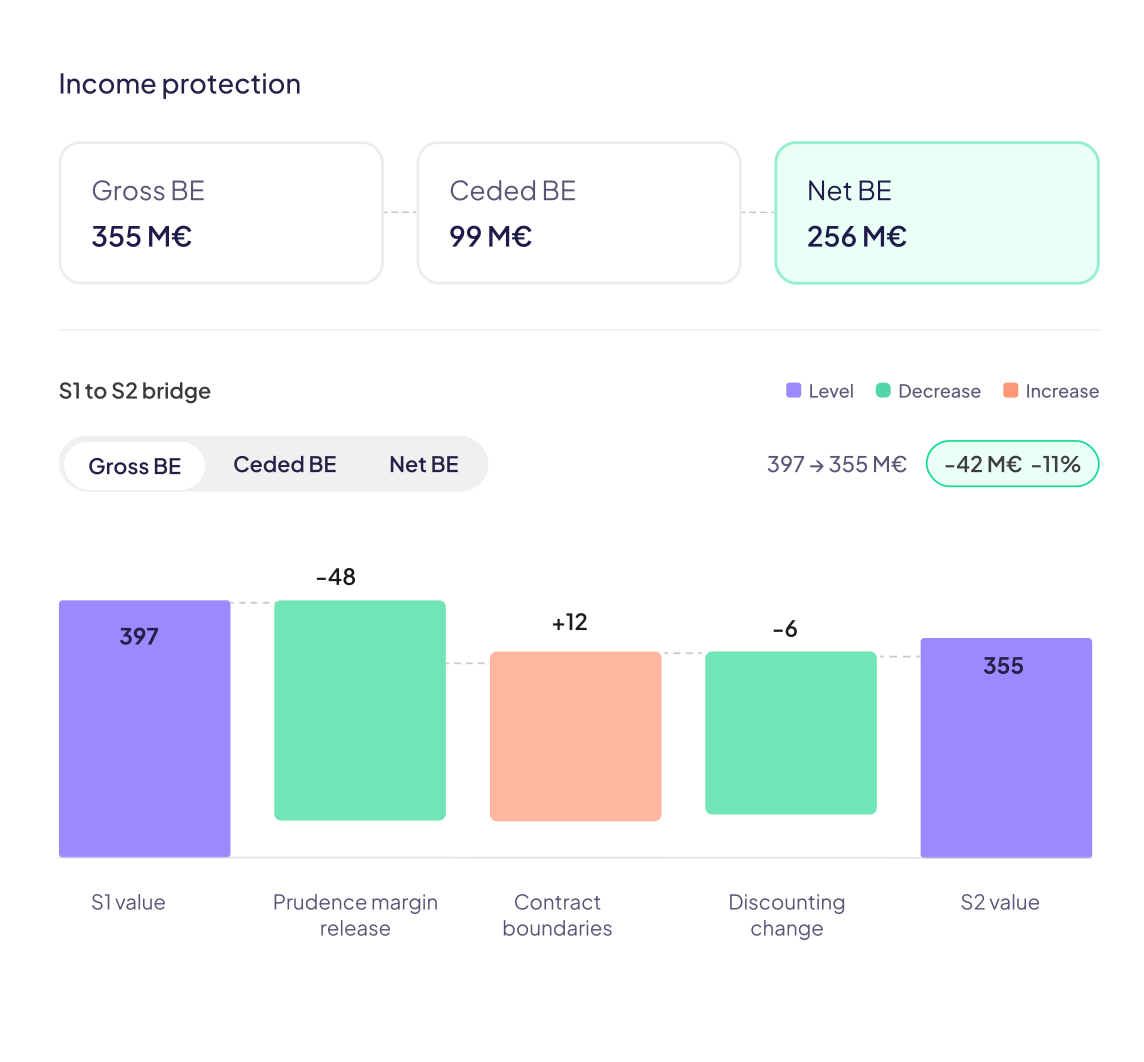
Spend less time producing Solvency II, and more time challenging it
Choose the offer that fits your Solvency II process
Every offer runs on the same Solvency II standard. Start from what your process already covers, and add only what is needed.
Basic
Pillar I and III, from your own cash flows
- Full standard formula: SCR, MCR, risk margin, diversification, deferred taxes
- Prudential balance sheet and solvency ratio
- Actuarial QRT data prepared
- Import of your central and shocked cash flows and parameters
- Direct, accepted and ceded business
- No cash-flow generation
- No ORSA
Recommended
Standard
Basic, plus cash-flow generation
- Everything in Basic
- Deterministic cash flows and Best Estimate, including the cash flows of every Solvency II shock
- Non-life, French health and protection, life without profit-sharing
- Expenses generation
- Option: Stochastic Life with profit-sharing
- No ORSA
Corporate
Your ORSA, on the same data and models
- Everything in Standard or Basic
- Business plan with new business
- Projection of balance sheet, P&L and Solvency II KPIs
- Central and stressed scenarios
- Asset-liability projection and management
- Option: ORSA for Stochastic Life with profit-sharing
Additional options
Each option works with Basic, Standard and Corporate.
Reporting
QRT completion, controls and XBRL
Group consolidation
Figures consolidated across your group’s entities
Design
Build your own models, data, processes and Python steps
Stochastic Life
ORSA for Stochastic Life with profit-sharing
All offers are also available for the Colombian solvency regime.
Everything you need to know about addactis® Capital Modeling
The objectives of Solvency II are:
- Increasing transparency and accountability: Improving the transparency of insurers’ financial positions and operations both to regulators and the public.
- Enhancing the protection of policyholders and beneficiaries: Ensuring that insurance companies are financially capable of meeting their obligations to policyholders.
- Deepening the integration of the EU insurance market: Facilitating a more uniform and efficient European insurance market.
- Increasing the international competitiveness of EU insurers: Helping EU-based insurers to be competitive on a global scale through a robust regulatory framework.
- Promoting better risk management: Encouraging insurers to improve their risk management practices and capabilities.
- Ensuring better regulatory supervision: Providing a framework that promotes a consistent approach to supervision across EU member states.
The three pillars of Solvency II are designed to enhance the regulation of the insurance sector in Europe:
- Pillar I: Quantitative requirements – This pillar requires insurers to maintain sufficient capital to cover the risks they undertake. It includes the evaluation of the balance sheet, the Solvency Capital Requirement (SCR), which is the capital needed to absorb significant losses, and the Minimum Capital Requirement (MCR), which is the minimum safety threshold below which the insurer’s solvency is considered inadequate.
- Pillar II: Governance and supervision – It mandates that insurance companies have robust governance systems and conduct their own regular Risk and Solvency Assessment (ORSA). This pillar focuses on the quality of risk management, strategy, and the regulatory supervision process.
- Pillar III: Transparency and reporting requirements – This pillar requires insurers to publish detailed information about their risk profile, governance system, and solvency. This includes the regular publication of Solvency and Financial Condition Reports (SFCR) to inform the public and supervisory authorities.
Capital Modeling helps you reach Solvency II compliance across all three pillars: capital, governance and reporting.
There are 5 steps:
- Step 1: Data Collection and Management
Efficiently gather all necessary data inputs from various sources, formats and data connections, ensuring perimeter completeness. Manage data flows seamlessly between different transformation steps, maintaining traceability and integrity. Embeds data quality checks on data input. Access dashboards for data quality restitution, data overview and analysis. Add input step for each team. - Step 2: Calculation and Analysis
Use our advanced actuarial libraries, completed with various use cases, to perform all required calculations with precision. Our integrated tools support complex actuarial models, providing robust and reliable results. Design features allow to customize the solution to fit your products mechanisms. All along the closing process, dashboards allow to present standard indicators to understand, communicate and monitor key indicators related to valuation, projection solvency. - Step 3: Reporting and Compliance
Generate comprehensive reports that meet all regulatory requirements. Ensure compliance with Solvency II standards, providing transparent and detailed documentation for auditors and stakeholders. - Step 4: Review and Decision-Making
Analyse generated reports to make informed decisions. Our solution offers real-time insights into business impacts, profitability, and risks, aiding in strategic planning and business steering. Accurately model the different stress test scenarios set by the regulator or by the company’s executive board. Compare results for each step. At the end, compare some scenarios. - Step 5: Continuous Improvement & operational risk adjustment
Implement feedback loops to continuously improve the actuarial processes and models. Stay updated with changing regulations and adapt swiftly to ensure ongoing compliance and efficiency. Get the granularity in risk measurement you need for Solvency and for coming IFRS17 frameworks.
Our Capital Modeling solution helps you stay compliant with evolving regulations while ensuring technical excellence through seamless access to key figures, validations, and digitalized workflows. By accessing actuarial model libraries and comprehensive resources, you optimize profitability and manage risks more effectively. Capital Modeling also contributes to your Solvency II assessments, valuations and risk management to make you save more time.
Yes. The platform separates the production process into independent steps (data input, modelling, aggregation, reporting) so actuarial, finance and risk teams can work on their own steps simultaneously, with permissions scoped to their role. Each team validates its step before it feeds into the next.
Yes. You can feed the solution with the cash flows and parameters of your existing liability models, central and shocked, or let the solution generate them. With the Design option, your own Python scripts can also run as a step of the same chain, with their inputs, outputs and logs kept for each run.